
 SH
 DL
 NF
 SH
Seven months into a ceasefire
In May 2026, several sewage pumping stations in Khan Younis stopped working. Wastewater flooded residential areas. The UN humanitarian office traced the breakdown to a shortage of supplies needed to keep backup generators running. Seven months into the ceasefire, the UN was still reporting strikes near homes. Getting oil into Gaza could determine whether a neighborhood faced sewage flooding as well.
The report follows aid from the crossing to the households and services that need it. Field reportUN humanitarian situation report, May 15, 2026Follow the supply problems from the crossings to the services they affect.
The October 2025 agreement began with hostage and prisoner releases and a partial Israeli withdrawal. The later steps proposed under the U.S.-backed twenty-point plan involved a different bargain. Hamas would have to relinquish its weapons. Israel would have to withdraw further. A new civilian administration and an international security force would have to take on responsibilities inside Gaza.
Each step changes who can enforce the agreement. If Hamas gives up its weapons first, it loses leverage over what happens afterward. If Israel withdraws first, it risks leaving an armed Hamas able to threaten its border and intimidate a new administration. Palestinian civilians have a stake of their own. They would be living under whoever can police the streets, make decisions about rebuilding and get a generator running again.
Who gives up their leverage first?
Israeli reserve officers Gabi Siboni, a colonel and military strategist, and Erez Winner, a brigadier general, see continued Hamas control as the danger to address first. They doubt the group will disarm voluntarily. Their May proposal calls for Israel to seize the rest of Gaza in stages if Hamas keeps its weapons. Israel would move civilians out of each combat zone and let them receive aid elsewhere. It would then besiege the evacuated area and cut off aid there. The authors also propose setting up an alternative administration and working with local clans opposed to Hamas. They would expand what they describe as voluntary emigration.
Siboni and Winner would have Israel take control of the rest of Gaza in stages if Hamas keeps its weapons. They would put aid distribution under separate control and make the defeat of Hamas a condition for a new government.
The proposal takes seriously the danger of giving a new administration responsibility while Hamas retains the means to overrule it. It leaves open where civilians would find safety during a siege and whether displaced people could freely choose to leave Gaza. It also leaves the question of what authority a replacement administration would have once Israeli troops were gone. For Israel, military control might create the conditions to start a handover. The administration would still have to earn acceptance from the people it was meant to govern.
The argument inside Israel also concerned what the government was willing to trade to bring hostages home. Podcast transcriptIsrael at War — The New PlanMonths before the ceasefire, Halevi warned that some members of Israel’s government saw getting the hostages home as an obstacle to pursuing their plans for Gaza.
 YH
Months before the ceasefire, Halevi warned that some members of Israel’s government saw getting the hostages home as an obstacle to pursuing their plans for Gaza. It matters which of those aims is allowed to govern the next decision. And they see them as an obstacle to their policy.
Brian Michael Jenkins, a terrorism researcher at RAND, asks what Hamas might do if surrender threatens its survival. His January analysis sketches several courses the group could take, from continued confrontation to seeking a political role. Its leaders might offer to give up some weapons while retaining others for protection against rivals. He presents this as a possible bargaining position, with room for disagreement within Hamas itself.
The military scenarios run from partial disarmament to continued fighting. AnalysisRed Teaming Hamas’ OptionsFollow three ways Hamas might respond to demands to give up its weapons.
That scenario makes the wording of an agreement matter. A promise to hand over rockets could leave a group with the guns it uses to control a neighborhood. An agreement would have to specify which weapons are surrendered, who checks the handover and who takes over policing. It would also need to offer people who comply some protection against reprisals. Otherwise, keeping a weapon may still seem safer than trusting the next step.
Who can make a deal for Palestinians?
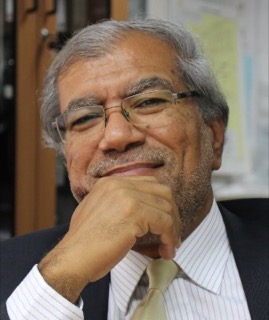
Khalil Shikaki, director of the Palestinian Center for Policy and Survey Research, would put a political settlement ahead of disarmament. In his January policy brief, he proposes elections, a more representative Palestine Liberation Organization and national institutions that connect Gaza and the West Bank. In his proposed revision of the ceasefire plan, agreement on a two-state outcome would come first, with disarmament following a final settlement.
 KS
Shikaki would connect Gaza and the West Bank under representative Palestinian institutions. He puts elections and a political agreement ahead of disarmament, which would give Palestinians a say in who makes the bargain.
There is a reason to settle that question early. A negotiator needs authority to make concessions on other people's behalf. Elections would give Palestinians a way to choose those negotiators and judge the terms they accept. A committee appointed from outside Gaza can have a mandate from its sponsors and still struggle to persuade residents that it speaks for them.
 KE
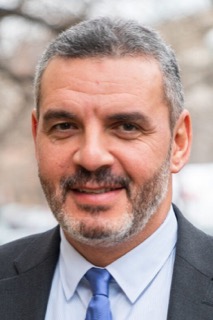
Elgindy argued early in the war that Gaza’s recovery needed a Palestinian leadership able to act and to speak for its people abroad. He proposed rebuilding and broadening the Palestine Liberation Organization. His test for a new body was whether it had both public legitimacy and the ability to do the job.
There is a separate question about what voters would accept once someone could put a deal to them. SurveyPalestinian–Israeli PulseScheindlin and her co-authors tested a two-state agreement and then offered provisions that might make it more acceptable.
 DS
Scheindlin and her co-authors tested a two-state agreement and then offered provisions that might make it more acceptable. Some provisions raised support among the people surveyed. The poll dates to 2024. Its value here is in showing how much the terms of a deal can matter to the answer.
The objection from Siboni and Winner's security-first argument is immediate. An armed organization can threaten candidates, intimidate voters or disregard a result it dislikes. Shikaki's proposal therefore raises a practical question about the period before a settlement. Who would protect an elected administration while some factions still held weapons? The same question confronts an appointed administration, which would have less claim to a public mandate.
What power would a new administration have?
In March, Nathan J. Brown, a professor of political science and international affairs at George Washington University, examined the bodies supposed to run the transition. The international Board of Peace had met, but he saw little evidence that it could run operations in Gaza. He found that local parts of the old administration still functioned in some areas. The Palestinian committee supposed to take over civilian affairs, the National Committee for the Administration of Gaza, was still operating out of a hotel in Cairo.
 NB
Brown found that the international Board of Peace had little operational role in Gaza. The Palestinian committee meant to take over was still working from Cairo. Municipalities, community groups and parts of the old administration still did work that a successor government would have to take on or support. it seems to play no operational role
The report follows who still does the work while the new bodies meet elsewhere. AnalysisTrump’s Plan for Gaza Is Not Irrelevant. It’s Worse.Brown found that the international Board of Peace had little operational role in Gaza.
His account complicates the idea that Gaza has an administrative vacuum a new committee can fill. Someone already knows how to run a school, maintain a pipe or distribute supplies, even if the institution they work for is damaged or politically compromised. A successor administration would have to decide which services to keep running, who can deliver them and how residents could challenge its decisions. Starting over on paper can mean interrupting the work that keeps people alive.
Another proposal would have put some of those responsibilities on neighboring Arab governments. Podcast transcriptThe New York Times’ Bret Stephens on IsraelStephens proposed a long Arab mandate for Gaza after Israel defeated Hamas.
 BS
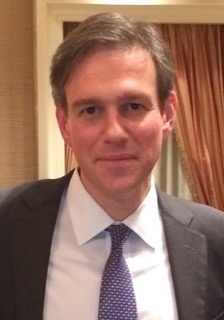
Stephens proposed a long Arab mandate for Gaza after Israel defeated Hamas. He thought the civilian toll and the risk of instability gave neighboring governments a stake in running the transition. It was a proposal for Arab governments to take on security and administration, well before the Board of Peace was formed.
A handover would require specific decisions from Israel and Hamas. A committee that cannot get its staff through a crossing or move equipment to a repair site depends on permissions it cannot grant. If Hamas fighters can override police decisions, the committee's authority ends where that armed power begins. The transfer becomes real when the new administration can make and carry out decisions under agreed rules.
A truck at the border is only the beginning
Aid deliveries are one way to see where power actually sits. In the first eleven days of May, only about half of the aid trucks from Egypt tracked by the Logistics Cluster could unload at Israeli-controlled crossings, according to the UN's May 15 report. That figure covers the trucks the cluster followed. It tells us where that cargo stopped. A second question begins after a truck unloads. Can aid workers collect the supplies, drive them where they are needed and keep a service running?
There are different remedies depending on where the delivery breaks down. A crossing authority can admit a truck carrying generator parts. A safe route inside Gaza lets a crew get those parts to a pumping station. Funding pays workers and buys the next round of supplies. A household can still be living beside wastewater after an official announces that more aid has crossed the border.
This is where arguments about a ceasefire can pass each other. A negotiator may point to a release or a commitment signed abroad. A resident may judge it by whether clean water comes back. Both observations belong in an account of the agreement. The second tells us whether the authority promised in the first has reached the street.
How to tell if a handover is happening
Any proposal for the next stage should be specific enough that a person living in Gaza or near its border can tell when a promise has been kept. An outside monitor could record what weapons changed hands. A withdrawal map could show which areas were handed over and when. Publishing those steps would help people see whether one party had complied and whether the next commitment came due.
An agreement on Gaza’s administration can leave the larger political question open. Two earlier arguments spell out what a durable settlement would have to deliver.
 JM
Mearsheimer argued that peace required a sovereign Palestinian state alongside Israel. In the same 2023 interview he doubted Israel would accept that outcome. A committee that administers Gaza while others control its borders falls well short of the state he had in mind. the only way you’re going to get peace here is if you have a two-state solution
The discussion of sovereignty starts about an hour and forty minutes into the interview. Podcast transcriptJohn Mearsheimer on the Lex Fridman PodcastMearsheimer argued that peace required a sovereign Palestinian state alongside Israel.
 PB
Beinart makes equal rights the test of a settlement. In his 2020 essay he considers both a single state and a confederation that would allow two peoples to govern themselves while sharing some institutions. A handover in Gaza would answer only a small part of his question.
The essay describes what shared government could mean in practice. EssayYavne: A Jewish Case for Equality in Israel-PalestineBeinart makes equal rights the test of a settlement.
The political question takes longer to answer. A civilian administration needs powers it can exercise and people who can hold it to account. A ballot would help give those powers a public basis. Voters also need to know that their choice will survive a losing faction's refusal to accept it. How the parties provide that protection is part of the bargain over security, rather than a task to leave to the eventual winners.
The next time negotiators announce progress, ask which decision someone can now make that they couldn't make before. A weapons handover, a troop withdrawal and permission to repair a pumping station are different kinds of progress. A durable agreement would explain how one makes the next possible.
Unresolved questions
- What authority would a Palestinian administration have over police, crossings and public services on the day it takes office?
- Which weapons and positions would be handed over first, and who would verify each step?
- Who could call elections in Gaza and the West Bank and protect the people taking part?
Sources and further reading
The reports record what was happening in Gaza. The other sources offer competing proposals for what should happen next, and older accounts that explain where those proposals come from.
The work behind the voice cards and the comparisons in the text.
- Where Is Gaza Headed?
- Israel at War — The New Plan
- Enduring Consequences and Palestinian Strategy
- What Is Needed to End the War in Gaza?
- Palestinian–Israeli Pulse
- Trump’s Plan for Gaza Is Not Irrelevant. It’s Worse.
- The New York Times’ Bret Stephens on Israel
- John Mearsheimer on the Lex Fridman Podcast
- Yavne: A Jewish Case for Equality in Israel-Palestine
Records, field reports and other evidence about what happened.
Older work and related arguments that give the debate context.
Open for the labels used on the voice cards.