
What Iran expected from its allies
Iran spent decades cultivating armed allies that could put pressure on Israel and the United States from several directions. When Israel attacked Iran in June 2025, and the United States later joined the strikes on nuclear sites, many of those allies were still in place. What it lacked was the protection it had expected them to provide.
The International Atomic Energy Agency dates the attacks on Iran's nuclear facilities from June 13 to 24. Iran had already lost a friendly government in Syria, and Israel had badly weakened Hezbollah in Lebanon. Hezbollah held back from opening a front in June, while the Houthis in Yemen took limited military action. Their survival leaves a question that the air campaign could answer only in part. What could those partners do for Iran when it was Iran itself under attack?
The groups are commonly called the axis of resistance. They share some enemies and receive varying kinds of support from Tehran. Their roots are local. An Iraqi armed faction has a stake in who governs Baghdad. The Houthis have territory to hold in Yemen. When war comes, Tehran's interests are one consideration in decisions that can expose those groups and the people around them to retaliation.
What was lost when Syria fell
Ray Takeyh, an Iran scholar at the Council on Foreign Relations, was already arguing in January 2025 that Tehran's decades-long effort to extend its reach through armed allies had largely unraveled. He was talking about the period that brought down the Syrian government, months before the June war. Syria had helped connect Iran to Hezbollah. Losing that route, while Hezbollah was reeling from Israeli strikes, made it harder for Iran to threaten a strong response from Lebanon.
 RT
Takeyh was describing the fall of Syria’s Assad government in December 2024. He argued that it undid decades of Iranian investment in a network of armed partners. That was his assessment six months before Israel and the United States struck Iran. that has essentially crumbled in eleven days
Renad Mansour, director of the Iraq Initiative at Chatham House, and fellow Chatham House researchers Hayder Al-Shakeri and Haid Haid agreed that the losses were serious. Their March 2025 report put more weight on what remained. They trace how groups in Iraq, Lebanon and Yemen acquired influence over government institutions, businesses and sources of money. Those ties can outlast the deaths of commanders and help a group rebuild after a strike.
 RM
Mansour, Hayder Al-Shakeri and Haid Haid trace the armed groups’ access to state institutions, cross-border trade and finance. A commander or supply route can be lost while those sources of income and influence survive. entrenched within state structures, and wield significant power in their own right
The report traces the groups’ hold over institutions as well as their ties with one another. ReportThe Shape-Shifting Axis of ResistanceMansour, Hayder Al-Shakeri and Haid Haid trace the armed groups’ access to state institutions, cross-border trade and finance.
The two accounts lead to different tests. If the question is whether Tehran can put several fronts into action quickly enough to prevent an attack, losing Syria and much of Hezbollah's strength matters even if Tehran keeps political allies elsewhere. If the question is whether the partners can recover or obstruct decisions in their own countries, the alliances, revenues and offices they hold may tell us more than a count of missiles fired during twelve days.
 BS
Saab argues that Hezbollah’s confidence in its own power and dependence on Iran for strategic direction made its earlier defeat by Israel worse. His account helps explain how a group with formidable weapons could take a military gamble that left it much weaker by June 2025.
The June war gives the first test a partial answer. Israel and the United States were willing to strike Iran directly. The allies Iran had built up for years could still impose costs, but they had failed to make those attacks too costly to attempt. A military setback for Tehran leaves room for armed groups to keep power where they live.
Why Baghdad wanted to stay out
Hamidreza Azizi and Isabelle Werenfels, researchers at the German Institute for International and Security Affairs, explain how Iraq tried to stay out of the June 2025 confrontation. They describe Iran's influence there as a combination of ties to political parties, links with some factions of the Popular Mobilization Forces and deep economic connections. The Popular Mobilization Forces are an umbrella of armed groups within Iraq's security system. The connection to Tehran varies among factions.
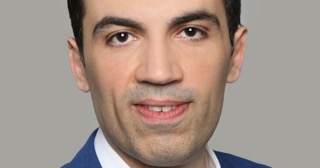 HA
Azizi and fellow researcher Isabelle Werenfels describe Iraq’s efforts to stay out of the June war. Iran had allies inside Iraq, but Iraqi officials also had trade, energy and security interests of their own to protect.
Those relationships give Iran influence and give Iraqis something to bargain over. Officials in Baghdad have reasons to keep trade and energy links with Iran, while trying to avoid an attack on Iraqi territory or on U.S. forces based there. An armed faction with a position in the Iraqi state also has something to lose in a war that makes Iraq a target. Its ability to fight and its willingness to do so can move in different directions.
The authors trace Baghdad’s room for maneuver before, during and after the strikes. Research paperReclaiming Iraqi AgencyAzizi and fellow researcher Isabelle Werenfels describe Iraq’s efforts to stay out of the June war.
The authors' account also explains why a lull in fighting tells us so little about whether a faction has lost power. To judge that, look at who can pay fighters, influence appointments and decide how the security forces operate. Those questions concern Iraq's government. The answer could leave an Iraqi faction strong at home and of limited use to Tehran in a direct war.
What the Houthis could do from Yemen
Yemen offers a different case. The Sana'a Center's account of the June fighting describes a limited Houthi role during the war. On June 15, the group said it had fired at Israel in coordination with Iran. A claim of coordination says little on its own about who decided when to fire or how much help Tehran could count on.
 EK
Kendall describes a movement with its own leadership, territorial aims and reasons to fight. Backing from Iran gives the Houthis reach. She points to the weapons the group can stockpile and make in Yemen as a reason it could keep fighting with less Iranian support. In an asymmetric fight, all they need to do is keep going
A group can make shipping near its coast riskier while having much less reach against an air campaign over Iran. The Houthis' position in Yemen gives them leverage around the Red Sea. That is valuable to Tehran when the two share a goal. It gives the Houthis leverage of their own when they weigh the risks of joining an Iranian fight. Even a partner that wants Iran to prevail may decide it has better ways to spend its weapons than firing on the day Tehran needs them.
Kendall explains what the Houthis can keep doing with weapons made or stored in Yemen. InterviewWhat the Houthis Really WantKendall describes a movement with its own leadership, territorial aims and reasons to fight.
Iraq and Yemen show why a map of Iran's friends is a poor guide to the next exchange of fire. In one place, armed factions have influence inside a government that is trying to avoid war. In the other, an armed movement can threaten a shipping route from territory it controls. Adding the two together as if they were units in one army obscures the decisions that actually determine what happens.
The strikes interrupted nuclear inspections
The fighting also changed what outsiders could know about Iran's nuclear program. The IAEA's September 2025 report says it halted verification activities during the strikes and decided by the end of June to withdraw its inspectors for safety reasons. Iran suspended cooperation by law in July. As of that report, the agency had been unable to access safeguarded Iranian nuclear facilities other than the Bushehr power plant since the attacks began.
 SS
By December, Shine reported that inspectors had made some visits in Iran without entering the facilities that were struck. The distinction matters when judging what Iran had resumed cooperating on and what inspectors could verify.
Military damage and knowledge about what survived are separate matters. A strike can damage buildings and equipment. Satellite images can show some of that damage. Inspectors need access and records to establish where nuclear material is and how much remains. When access falls away, outside governments have to make decisions with less direct evidence, even if the strikes achieved much of what their planners intended.
For the official record of the interruption, see the agency’s September report. Inspection reportIAEA safeguards report, September 2025Read the agency’s record of the strikes and the gaps that opened in its inspections.
 AM
Miller asked whether political pressure could distort the U.S. assessment of what the strikes had damaged. His question matters to any negotiation that starts with a public claim about how much of Iran’s program remains.
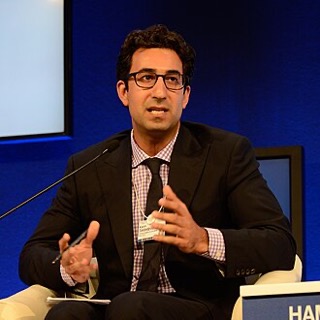 KS
Sadjadpour expected Tehran to use repression to hold on at home while leaving room for diplomacy abroad. His expectation in early July was that the government had reasons to avoid a second round of strikes. they’re not going to slam the door on diplomacy
That makes the terms of any proposed agreement more important than the announcement of talks. Would inspectors be allowed into the relevant facilities? What would Iran have to declare about any material it moved during the fighting? How would a disagreement about the inventory be resolved? An agreement that restores a way to answer those questions would give both sides something the bombing could never deliver.
The war reached Qatar too
From Qatar, the war looked different again. On June 23, Iran targeted Qatar's Al Udeid Air Base, which hosts U.S. forces. Iran described the attack as retaliation for the U.S. strikes. Qatar told the United Nations that its defenses intercepted the attack, condemned it as a breach of sovereignty and called for a ceasefire and a return to talks. A confrontation between Iran, Israel and the United States had reached a fourth country's airspace.
 RG
Gerecht and Ray Takeyh read Iran’s retaliation as an attempt to restore some deterrence while keeping the United States from striking back harder. That is their reading of Tehran’s intent. Qatar’s letter records how the government on the receiving end saw the strike.
Qatar recorded its account of the strike the following day. UN letterQatar’s letter to the UN, June 24, 2025Read Qatar’s account of the attack on Al Udeid and its request for a ceasefire.
For a government hosting U.S. forces, the question is how to gain the protection that comes with those ties while limiting the chance that an American operation brings a retaliatory strike to its territory. A country can have a reason to maintain the relationship with Washington and a reason to seek a way out of the fighting with Tehran. Those interests matter to what the United States can do in the region, and to what Iran risks by widening the war.
 HI
Writing after Israel’s opening strikes, Ibish examined why Gulf governments condemned the attack. They had been pursuing calmer ties with Iran and had reason to fear that a war nearby could reach their own territory.
For people inside Iran, a different question followed the ceasefire. What could they learn about the damage, and what would the war change about their lives once the strikes stopped?
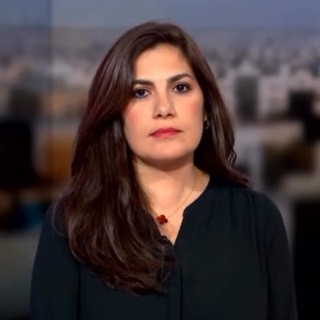 NM
On June 24, Mortazavi told CNN that an internet disruption had made it hard to reach people in Iran and that most of her contacts were coming back online. She also cautioned that a weakened government could still retaliate.
 VN
In a conversation with Middle East Institute researcher Gönül Tol, Nasr considers whether survival counted as success for Iran’s leadership and what the war meant for Iranians who wanted political change.
The conversation follows the political questions left open by the end of the fighting. PodcastIran at a Crossroads: War, Survival, and the Future of the Islamic RepublicIn a conversation with Middle East Institute researcher Gönül Tol, Nasr considers whether survival counted as success for Iran’s leadership and what the war meant for Iranians who wanted political change.
The most telling evidence after a war like this would be changes in who can make a commitment and keep it. An Iraqi government's ability to restrain armed factions, inspectors' access to Iran's nuclear sites and a Gulf government's ability to keep its territory out of an exchange of fire all matter for different reasons. Counting how many of Tehran's allies are still standing leaves those questions open.
Unresolved questions
- Who in Baghdad can enforce a decision to keep armed factions out of another regional war?
- When would inspectors regain access to the struck facilities and verify what became of the nuclear material?
- What can Gulf governments agree with Washington and Tehran before another exchange of fire puts their territory at risk?
Sources and further reading
The inspection report and letters to the UN are records of the war and its aftermath. Interviews and analysis give different accounts of how Iran and its allies made their decisions.
The work behind the voice cards and the comparisons in the text.
- Iran Reacts to Trump’s Victory
- The Shape-Shifting Axis of Resistance
- Why Hezbollah Fell
- Reclaiming Iraqi Agency
- What the Houthis Really Want
- The Deadlock Surrounding Iran’s Nuclear Program
- How Washington and Tehran Are Assessing Their Next Steps
- Can Iran Strike Back Effectively?
- Iran Is Attacked, the Gulf Reacts
- Negar Mortazavi on the Ceasefire
- Iran at a Crossroads: War, Survival, and the Future of the Islamic Republic
Records, field reports and other evidence about what happened.
Older work and related arguments that give the debate context.
Open for the labels used on the voice cards.